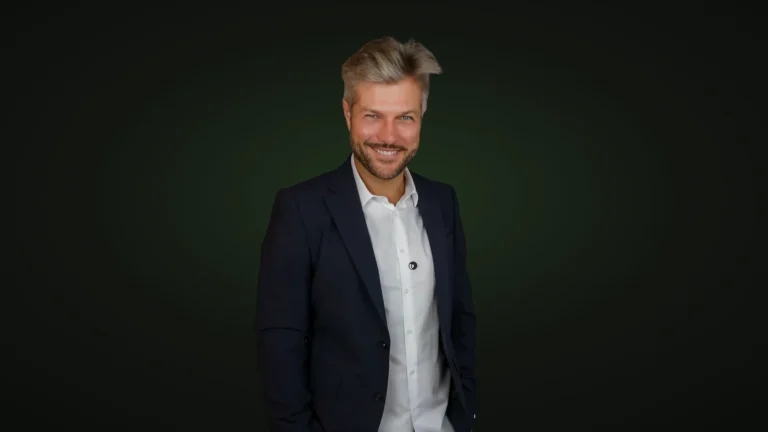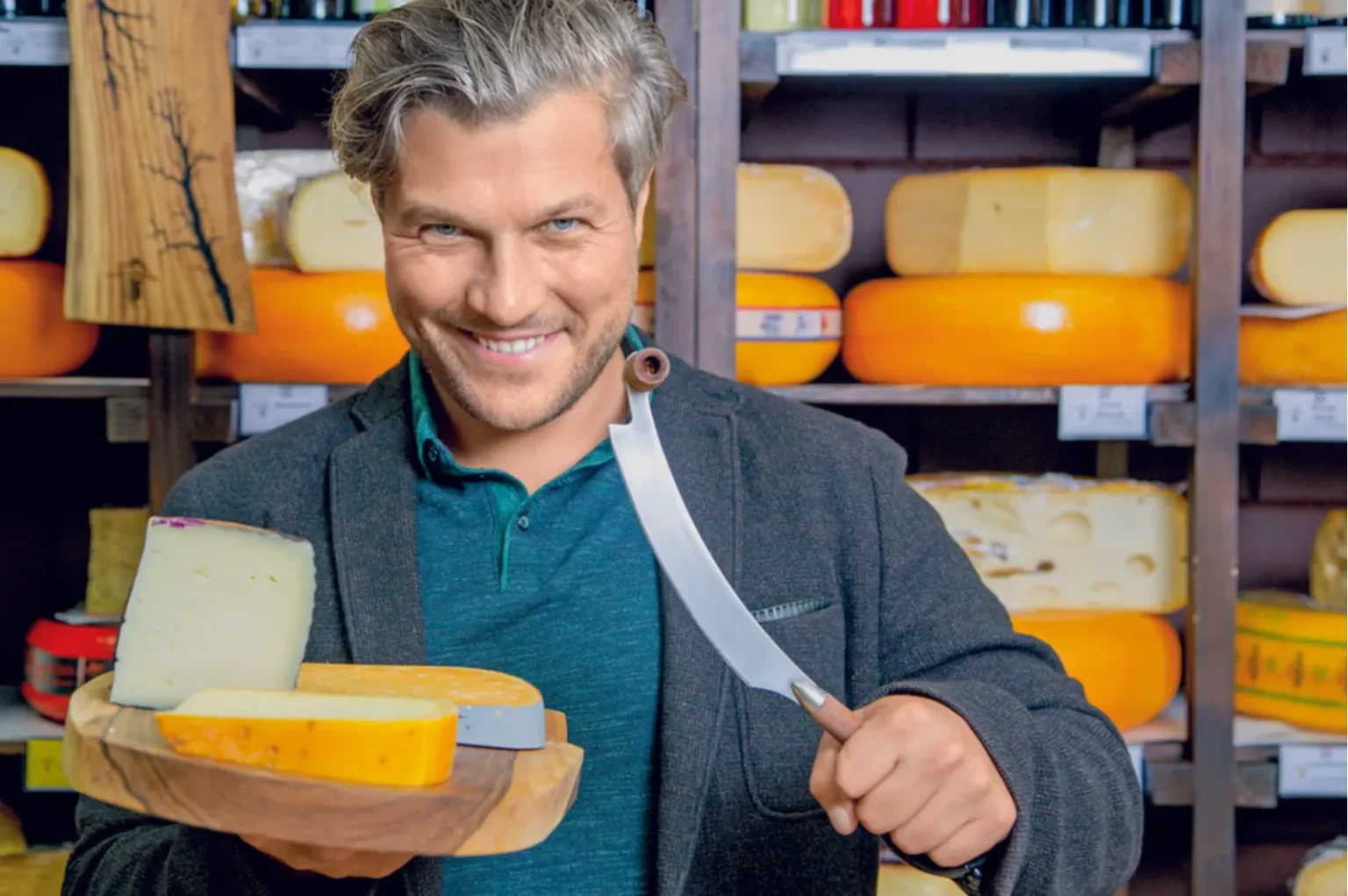
What do 1.7 million kilograms of cream look like? Alex Paciorkiewicz knows it takes 66 trucks to move them. He knows because that is how many he used. He bought the cream from one of the Polish dairy cooperatives and sold it to a German giant – Müller Quakers. It was turned into coffee creamer.
“It was my biggest single transaction. I spent PLN 19.8 million. The margin on the sale was minimal, but at that moment it paid to buy and sell,” explains the CEO of Foodcom. Tanned and rested, he has just returned from a week in Fuerteventura, where he and the best traders from his company closed similar deals sitting by the pool instead of in the Warsaw office.
To successfully trade dairy products such as cheese, milk powder or whey on a global scale, you do not need to run around farms and cooperatives every day. Once established, contacts with producers and buyers pay off in the future. After that, what you mostly need are quick reflexes, nerves of steel – because prices change every day – and a feel for the market. The head of Foodcom clearly has them, because his company is growing very fast. He founded it at the end of 2014; by the end of 2015 its turnover was PLN 32.5 million, a year later PLN 84 million, and by the end of 2017 – PLN 145.7 million. This year it reached that level by the end of August. In commodity trading, margins usually hover between 2 and 3 percent, so net profits are not large, but Foodcom has been profitable from the start and keeps growing its profits.
It was my biggest single transaction. I spent PLN 19.8 million.
Alex PaciorkiewiczFounder & CEO, Foodcom S.A. & FDCM
Just a dozen or so years ago, the now 33-year-old Paciorkiewicz knew little about agricultural products, and their prices did not interest him at all. He grew up in Warsaw, studied foreign languages and international trade in the UK, and got his first job in the “French Silicon Valley”, Sophia-Antipolis near Nice, where he recruited IT specialists for global corporations on behalf of an outsourcing company. But he missed Poland. After returning, he joined Interfood, a Dutch company trading dairy products. Agriculture did not seem sexy to him, but the chance to travel caught his interest. He quickly realised that trading milk or vegetable oil can be just as exciting as trading crude oil.
“I try to approach it like a strategy game. On every major European market I have at least two traders following prices, offers and demand for raw materials. And we are constantly looking for new markets,” explains Paciorkiewicz.
Recently he has been selling dairy products to Saudi Arabia, the United Arab Emirates, Turkey and Vietnam, among others. These distant non-EU markets offer the best returns. That is also why the head of Foodcom cares so much about good relations with Polish dairies and about exporting from Poland to the world.
I try to approach it like a strategy game.
“Western countries protect their interests. When I buy raw materials from German or Dutch giants, it is on the condition that I will not export them outside the European Union. They do not want a Pole making money on their agricultural produce,” he says.
“We try to sell our products directly. But we cannot reach every market. That is when we use intermediaries such as Foodcom,” explains Szymon Makoś, export specialist at OSM Łowicz.
In Europe, the trade in dairy raw materials is dominated by two Dutch companies: Interfood and Hoogwegt. In the US, such goods are traded far more transparently – on the Chicago Board of Trade.
It was this kind of exchange that inspired Paciorkiewicz’s business idea. But before he went out on his own, he got to know the industry from the inside. The standard process of trading agricultural products looks like this: farmers deliver milk to collection points – usually large dairy cooperatives such as Poland’s Mlekovita or Mlekpol – and their presidents decide which products to make and who to sell them to. Part of it goes into packaged goods, such as cheese and butter for retail chains, but there is far more raw material than that. Then a decision has to be made on what is most profitable to produce, and it is sold to trading companies such as Interfood or Foodcom, which resell it.
Paciorkiewicz himself had earned millions of euros for Interfood, also selling vegetable oils to Polish dairies for the production of cheaper cheeses or butter-and-margarine blends. And he came to the conclusion that it would be better to do the same on his own account.
He founded Foodcom. At first he adopted a brokerage model. He wanted to mediate transactions between buyers and sellers. Transparently. So that everyone knew the transaction prices and what commission he was charging. The advantage of this business model was the minimal initial investment. He hired his father to do the accounting – to this day he is Foodcom’s CFO. He also created a website showing how the prices of individual goods changed in real time.
“Unfortunately, I quickly had to change the business model,” he says.
After a few successful transactions, customers wanted to repeat them without the intermediary. So Paciorkiewicz found a private investor who gave him money for the first purchases in exchange for half of the company’s shares. Thanks to good investments, he was able to pay him back after just over a year. But he is not the sole owner of Foodcom today either. When it turned out that the business was growing fast, he decided to share it with his best traders. He brought many of them into the profession himself.
“They are the most important people in this business. That is why I do not want them to leave for the competition. I give them the best transaction commissions on the market and let them acquire shares,” he explains.
Paciorkiewicz knows what he is talking about – after all, he was once a trader at a competitor himself. The largest stake in Foodcom, as much as 20 percent, belongs to Mateusz Augustyniak, one of the first people to join the company. Today there are fourteen traders. Three of them are as tanned as their CEO. They flew to Fuerteventura as a reward for winning a company challenge – finding new customers for butter. The best of them won seven in three months. At Foodcom, nobody doubts any more that the agricultural commodities business is sexy.
“For me, it is getting sexier all the time,” laughs Paciorkiewicz.